
Finding suitable equipment for an older autistic child is not always straightforward.
My five-year-old son can become overwhelmed when we are out, struggles with longer distances and has limited awareness of danger. He may also try to run, which means trips that appear simple for other families can require a huge amount of planning and constant supervision.
For a long time, there were places I wanted to take my children but did not feel able to manage safely. I knew that having a suitable disability pushchair could make a difference, but many specialist options were either too bulky, too expensive or simply did not feel practical for our everyday family life.
I eventually purchased the Elise Neo Disability Pushchair for £235, reduced from its original price of £269.
Why I Chose It
One of the main reasons I chose this pushchair was its compact design.
I needed something that would provide my son with a safe and familiar place when he became tired or overwhelmed, without feeling as large and difficult to manage as some specialist pushchairs.
The pushchair also comes with a footrest, which helps him sit more comfortably and gives him additional support while we are out.
I purchased the sun hood and storage basket separately. I do think it is worth being aware of this when considering the overall cost, as these are accessories that many families may feel they need.
The sun hood has been particularly useful on bright days, while the basket gives me somewhere to carry drinks, snacks, spare clothes and the other items that often come with taking a SEND child out.
A Difficult Start
Unfortunately, our first experience with the pushchair was worrying.
On the very first use, one of the harness clips broke.
Because my son is known to run and has very limited awareness of danger, the harness is an important safety feature for us. Naturally, the clip breaking immediately made me concerned about whether the pushchair would be safe and reliable enough for his needs.
I contacted the company and explained what had happened. They arranged for a replacement pushchair to be sent and explained that this appeared to be a fault with the individual pushchair, as it was not an issue they had experienced previously.
I appreciated that the company responded and provided a replacement. However, as a parent purchasing specialist equipment for a child with significant safety needs, it was still an unsettling experience.
When a product is being relied upon to help keep a vulnerable child safe, every part of it needs to feel secure. I would always advise parents to carefully check the harness, clips, brakes and frame before every use, particularly when the pushchair is new.
The Difference It Has Made
Despite the difficult beginning, purchasing the pushchair has made a significant difference to our family.
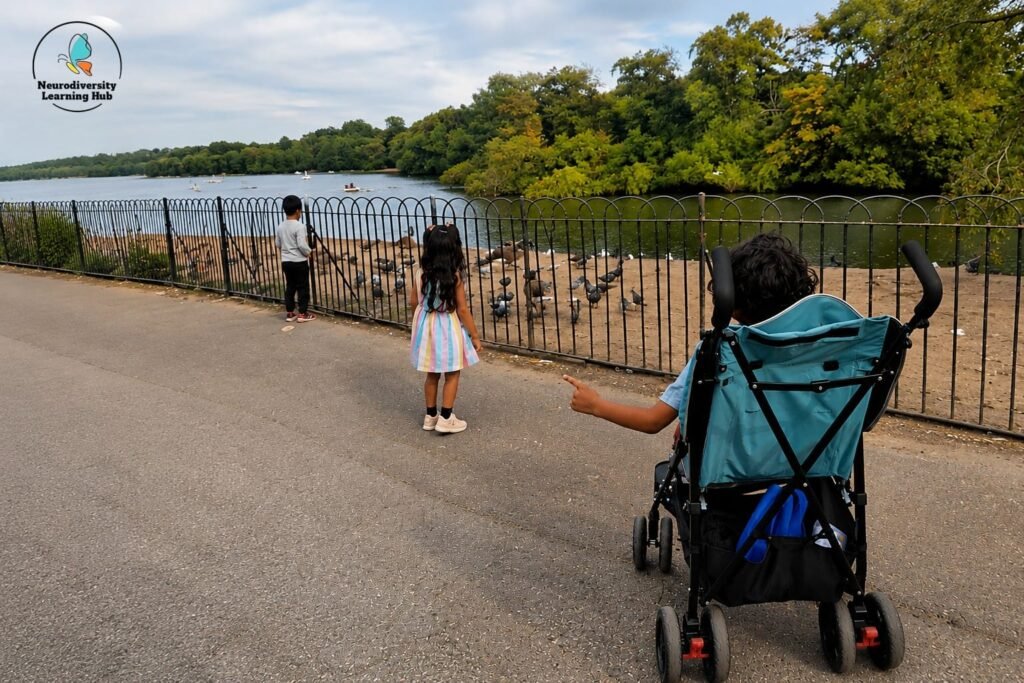
Since having it, my son has been able to join us on trips that I would previously have found extremely difficult – or may not have attempted at all.
So far, we have visited:
- The aquarium
- Different parks
- Blackpool
- Busier family attractions and longer days out
These experiences may sound ordinary, but for our family they have been incredibly meaningful.
The pushchair gives my son somewhere safe to sit when walking becomes too much, when the environment becomes overwhelming or when he simply needs a break.
It also gives me more confidence.
Before, I would often worry about how far we would need to walk, whether he might suddenly run, how I would manage him alongside my other children or what would happen if he became distressed far away from the car.
Now, I have another way to support him.
It does not remove every challenge, but it makes outings feel more manageable and gives us options that we did not have before.
More Than Just a Pushchair
For some people, a pushchair may simply look like a way of transporting a child.
For our family, it represents access.
It means my son can experience new places without being expected to walk for longer than he can manage. It provides a safe space when the sensory demands of an environment become too much. It allows us to stay out for longer and gives his siblings more opportunities to enjoy family trips too.
Most importantly, it helps us include him in experiences while still respecting his individual needs.
There can sometimes be judgement around older children using pushchairs. People may make assumptions based on a child’s age or appearance without understanding their disability, safety needs, sensory differences or ability to cope with unfamiliar environments.
But equipment should never be viewed as something that limits a child.
For us, this pushchair has created more freedom.
My Honest View
The Elise Neo Disability Pushchair is compact, practical and has helped our family access places we previously struggled to visit.
I like that it is easier to manage than some larger specialist pushchairs, and the footrest helps make it more comfortable for my son. The separate sun hood and basket have also been useful, although they do add to the total cost.
The harness clip breaking on the first use was a serious concern for me. I was reassured that the company arranged a replacement and explained that the original pushchair may have been faulty, but I would still encourage families to thoroughly inspect all safety features before using it.
Every child has different physical, postural, sensory and safety needs, so what works well for my son may not be suitable for every child. Families may wish to seek professional advice where appropriate, particularly if their child requires specialist seating or positioning support.
For our family, however, this purchase has opened the door to more outings, more shared experiences and more memories together.
Sometimes the right piece of equipment does not simply make life more convenient.
It makes parts of life possible.
The NLH View
At Neurodiversity Learning Hub, we believe suitable equipment can be an important part of inclusion.
A disability pushchair is not about restricting a child or preventing independence. For some children, it provides safety, regulation, comfort and access to experiences that may otherwise be out of reach.
Families should be supported to choose equipment based on their child’s individual needs, without judgement or assumptions.
Share Your Experience
Has a piece of equipment helped your child access more of the community or made family life more manageable?
At Neurodiversity Learning Hub, we believe parent and carer experiences deserve to be heard. Sharing honest experiences – including both the positives and the difficulties – can help other families feel more informed and less alone.
To share your story, please contact info@nlhadvocacy.co.uk.
This is a personal account of our family’s experience. The pushchair was purchased by me, and this post is not sponsored or paid for.
Discover more from Neurodiversity Learning Hub
Subscribe to get the latest posts sent to your email.