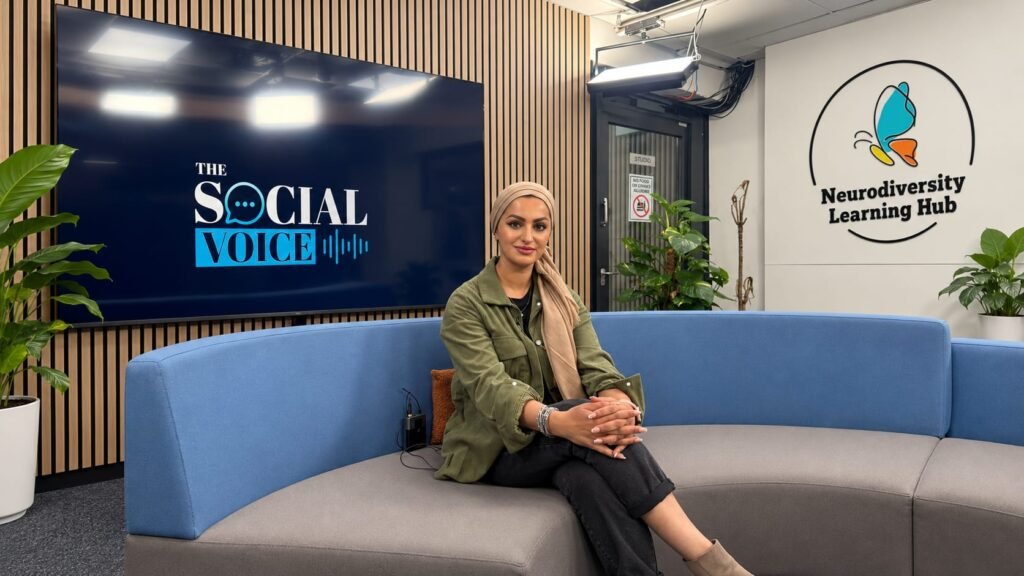
Recently, I had the opportunity to appear on The Social Voice with DM Digital English.
For me, it was about much more than simply appearing on a show or talking about Neurodiversity Learning Hub.
It was an opportunity to speak about the values that sit behind everything I do.
Parent voice. Collaboration. Education. Empowerment.
These are not just words I use when talking about NLH. They come from my own experiences as a parent, an educator and someone who has spent a lot of time navigating SEND systems alongside families.
I wanted to use the opportunity to explain why I believe parents need to be part of the conversation surrounding their children — not standing outside of it.
Parent Voice Matters
One of my strongest beliefs is that parents know their children in a way no report, assessment or professional meeting can fully capture.
That does not mean parents know everything.
It does not mean professionals are not important.
It means that parental knowledge is evidence too.
Parents see what happens before school.
We see what happens afterwards.
We see the exhaustion, masking, anxiety and dysregulation that might never appear during an observation.
We know the small signs that tell us something is wrong.
And we often remember the history behind the child sitting in that meeting room.
Yet many parents tell me they walk into SEND meetings feeling intimidated.
There can be several professionals around a table, unfamiliar terminology, reports full of acronyms and discussions about their child taking place in language that they may not fully understand.
Parents can leave meetings wondering what was actually decided.
I want that to change.
Parents should feel able to ask questions.
They should understand what is being discussed.
They should know that saying “I don’t agree” or “Can you explain that?” does not make them difficult.
Their voice belongs at that table.
Collaboration, Not Parents Versus Professionals
Something else I really wanted to emphasise is the importance of collaboration.
SEND conversations can sometimes become framed as parents versus schools, parents versus local authorities or families versus professionals.
I do not believe that approach helps children.
I have met some incredible teachers, SENCos, educational psychologists, therapists, social care professionals, support workers and other practitioners.
I have also worked with parents who have spent years fighting to get somebody to listen.
Both realities can exist.
For me, effective SEND support happens when everyone brings their piece of the picture together.
A teacher may understand how the child learns.
A speech and language therapist may understand their communication.
An occupational therapist may understand their sensory or functional needs.
An educational psychologist may help explain their learning profile.
And a parent brings years of knowing that child across different environments, situations and stages of their life.
When those voices work together, rather than competing against each other, we have a much better chance of understanding what the child actually needs.
Collaboration does not mean parents have to agree with every professional decision.
And it does not mean professionals should simply agree with parents.
It means listening respectfully, sharing evidence, being honest when something is not working and keeping the child at the centre of the conversation.
Empowerment Through Education
This is probably one of the biggest reasons I created Neurodiversity Learning Hub.
I do not want parents to feel that they need somebody else to speak for them forever.
I want them to understand the system well enough to eventually feel confident speaking for themselves.
Sometimes advocacy means standing alongside a parent in a meeting.
Sometimes it means helping them understand an EHCP.
Sometimes it means explaining what an annual review is, what questions to ask or what evidence might be important.
And sometimes it is simply explaining an acronym that everybody else in the room seems to understand.
Knowledge changes how you walk into a meeting.
When you understand the process, you can ask more focused questions.
When you understand your child’s EHCP, you can recognise when provision is missing.
When you understand your rights, you are less likely to accept “that’s just how we do it” without asking why.
That is what empowerment through education means to me.
Not telling parents what to think.
Giving them the information and confidence to make informed decisions for their own families.
Why Lived Experience Matters
My work with families does not come from professional training alone.
A huge part of it comes from being a parent myself.
I know what it feels like to sit in meetings discussing your child.
I know what it feels like to read reports about them.
I know the worry of wondering whether a setting can genuinely meet their needs.
I know the emails, phone calls, applications, appointments, waiting and chasing that happen behind the scenes.
And I know that SEND does not stop when the meeting ends.
You still go home and parent.
That lived experience has shaped how I communicate with families.
Sometimes people do not need another complicated explanation.
They need somebody to say:
“This is what it means. These are your options. Let’s work through it.”
Building Bridges
Another reason appearing on The Social Voice mattered to me was the opportunity to speak beyond the SEND community itself.
Inclusion cannot only be discussed by SEND parents.
We need schools involved.
Health professionals.
Community organisations.
Local services.
Educators.
Businesses.
Families.
And society more widely.
The more people understand neurodiversity and SEND, the less families have to constantly explain themselves.
My hope for NLH has always been to help build some of those bridges.
Not to replace existing organisations or professionals, but to work alongside them.
There are already many people doing valuable work.
If we share knowledge, signpost families appropriately and recognise each other’s expertise, families benefit.
More Than Advocacy
When people hear the word advocacy, they may imagine disputes, complaints or tribunals.
Those things can sometimes be necessary.
But advocacy is also much quieter than that.
It can be helping a parent prepare three questions for a meeting.
It can be encouraging somebody to write down what their child is experiencing at home.
It can be explaining why behaviour may actually be communication.
It can be helping a professional understand something from the family’s perspective.
Sometimes advocacy is simply making sure the person who feels least confident in the room still gets heard.
What I Hope People Took Away
If there was one message I wanted people watching The Social Voice to take away, it would be this:
We achieve more for children when parents and professionals work together — and informed parents are an important part of that partnership.
Parents should not have to become SEND experts simply to secure support for their children.
But while the system remains complicated, access to clear information matters.
That is why I will continue to educate.
Continue to advocate.
Continue to collaborate.
And, most importantly, continue to encourage parents to recognise the value of their own voice.
The NLH View
At Neurodiversity Learning Hub, our approach is built around three words:
Educate. Advocate. Navigate.
Educate families so information becomes understandable.
Advocate alongside families when their voices need strengthening.
Help them navigate systems that can often feel overwhelming.
But underneath all three is something even more important:
collaboration.
The best outcomes rarely come from one person holding all the answers.
They come when families and professionals bring their knowledge together, listen to one another and remain focused on the individual child.
I am grateful to The Social Voice and DM Digital English for giving me the space to talk about those values and why they matter so much to me.
Because every parent deserves to understand the conversation.
Every professional deserves the opportunity to understand the family’s perspective.
And every child deserves adults around them who are willing to work together.
Share Your Story
Have you ever felt unheard in a SEND meeting, struggled to understand the system or had a positive experience where professionals truly listened and worked with you?
At Neurodiversity Learning Hub, we believe parent and carer voices matter. Sharing real experiences can help other families feel less alone, raise awareness and show what meaningful collaboration can look like.
If you would like to share your story, experience or perspective with NLH, please get in touch at info@nlhadvocacy.co.uk.
Your experience matters. Your knowledge matters. Your voice matters.
Discover more from Neurodiversity Learning Hub
Subscribe to get the latest posts sent to your email.